Our Story

A Kingdom in Every Bottle

Kongo Beer is not named after a place on a map. It is named after one of the greatest states Africa ever built — and after the silverback who still rules the forests that kingdom once governed.

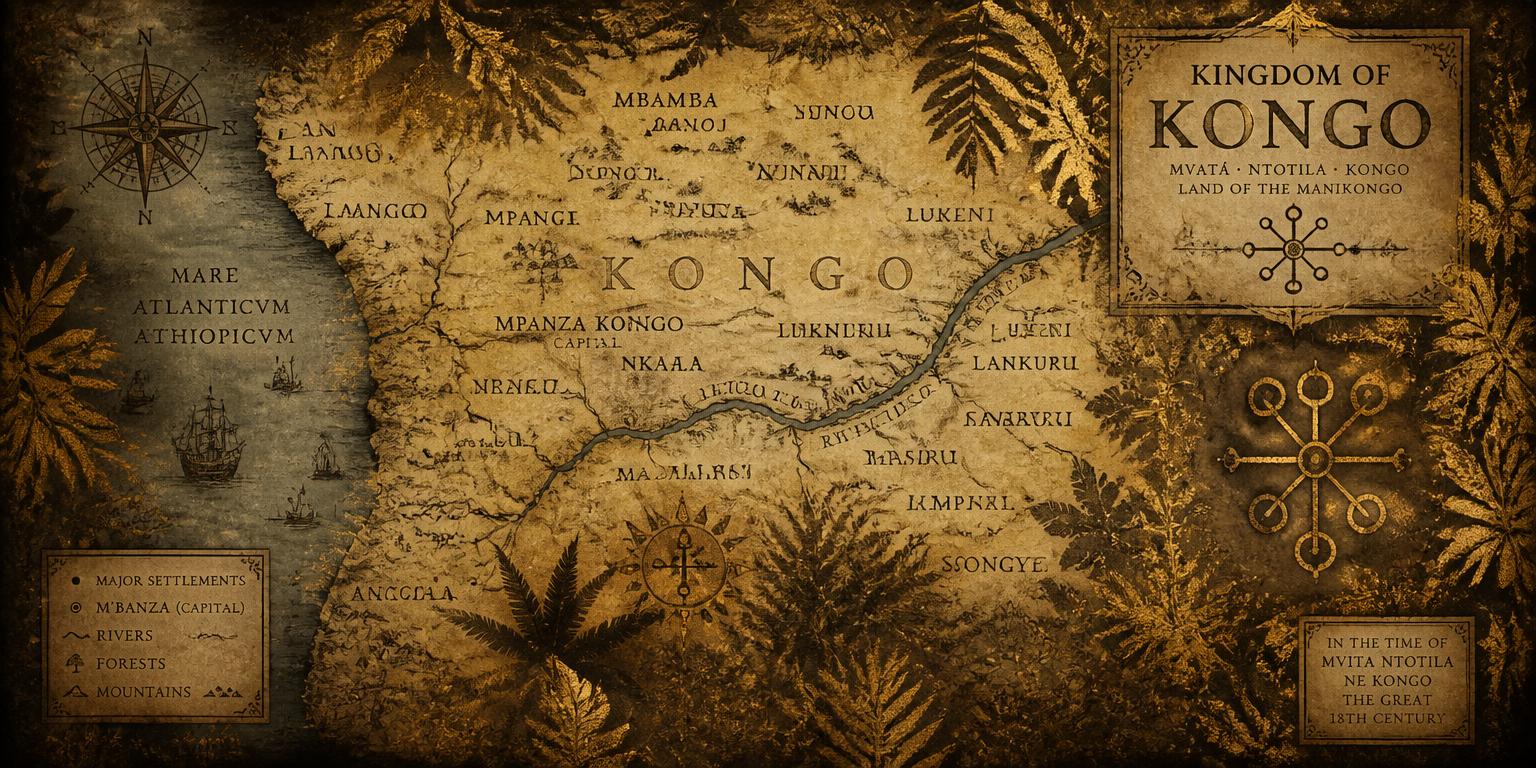
Antique map of the Kingdom of Kongo with the Congo River and M'banza-Kongo

c. 1390

The Founding at M'banza-Kongo

Lukeni lua Nimi crossed the Congo River and united the peoples of the Mbata, Soyo and Mpangu into a single kingdom, raising its capital on a high plateau the Portuguese would later call the City of the Congo. From that ridge the Manikongo ruled six provinces through a system of appointed governors, courts and tribute — a state of extraordinary sophistication centuries before Europe arrived on its shore.

1400s

Craft, Copper and Cloth

Kongo's wealth was made by its hands. Weavers turned raffia palm into textiles so fine that visiting merchants compared them to velvet. Smiths worked copper from Mindouli and iron from the interior. Nzimbu shells drawn from Luanda Bay served as royal currency. This was a civilisation that measured itself by mastery — and mastery is the standard we hold in the brewhouse.

1491

A Kingdom That Met the World as an Equal

When Portuguese caravels reached the mouth of the river, Kongo did not receive them as subjects but as sovereigns. Nzinga a Nkuwu and later his son Mvemba a Nzinga — Afonso I — exchanged ambassadors with Lisbon and Rome, wrote in Portuguese and Kikongo, and sent Kongolese scholars abroad. Afonso's son Henrique became the first sub-Saharan African bishop of the Catholic Church.

1665 — Onward

Endurance

The kingdom bent under the weight of the slave trade and the disaster at Mbwila, yet it did not vanish. Kongolese identity, language and cosmology carried across oceans and into new centuries. The dikenga — the Kongo cosmogram, a cross within a circle marking the sun's daily journey from birth through zenith, death and rebirth — became a symbol of a people who always return.

Why the Gorilla

The silverback does not roar to be obeyed. He is calm, deliberate and immovable, and he spends his strength protecting the troop rather than proving himself to it. In the forests that once fell within the Kongo Kingdom, he is the last king still holding court. That is the character we put on the label: quiet power, absolute loyalty, and no need to shout.

How We Brew It

Three expressions, each drawn from a different part of the story. The Amber Ale takes its colour from the red laterite soil of the plateau — malt-forward, honeyed, built for long evenings. The Extra Stout is the forest floor: roasted barley, dark cocoa and a long dry finish, conditioned slowly in the dark. The Premium Lager is the river at dawn — clean, bright, cold-fermented and unhurried.

Every batch is brewed in small runs, unrushed and unfiltered of character. We do not chase volume. We chase the standard the Kongolese craftsmen set six hundred years ago.

Kanda dia Kongo. The house endures.